
– Meta Title: Slewing Ring Bearing Noise Troubleshooting Part 2 | Oilfield & Offshore Equipment Repair
– Meta
Description: Complete slewing ring abnormal noise diagnosis guide for offshore rigs, oilfield cranes & heavy lifting machines. Check clearance test, mounting base faults & tiered maintenance solutions.
– Focus Keywords: slewing ring bearing noise, noisy slewing bearing troubleshooting, offshore crane slewing bearing repair, oilfield slewing bearing maintenance, slewing ring clearance measurement
– H1 Header: Slewing Ring Bearing Noise Troubleshooting & On-Site Repair Guide Part 2 (For Oil & Energy Heavy Lifting Equipment)
– URL Slug: slewing-ring-bearing-noise-troubleshooting-part-2-oilfield-offshore
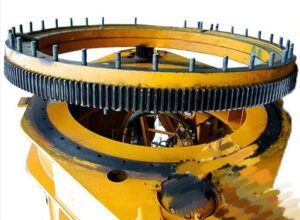
Slewing Ring Bearing Noise Troubleshooting & On-Site Repair Guide Part 2 (For Oil & Energy Heavy Lifting Equipment)
Heavy-duty slewing ring bearings are core load-bearing components for offshore rig cranes, oilfield lifting machinery, mining hoists and energy infrastructure equipment. Abnormal grinding, banging or rattling noise from slewing bearings is one of the most frequent failures on oil & gas job sites. Unaddressed bearing noise triggers unplanned downtime, delays project schedules and brings extra high maintenance costs.
In Part 1 of this guide, we covered the basic classification of slewing ring abnormal noise and simple preliminary inspection methods. Today in Part 2, we dive deep into standardized on-site fault diagnosis steps, hidden non-bearing root causes, and tiered maintenance solutions customized for harsh offshore, desert oilfield high-salt & dusty working conditions.
1. Measure Excessive Internal Clearance & Judge Raceway Wear with Dial Indicator
Most continuous metal banging noise under full load originates from oversized axial clearance caused by worn raceways and rolling elements. Field maintenance teams must use a dial indicator to complete quantitative testing instead of visual judgment only.
Standard Test Steps
1. Secure the dial indicator base on the machine’s fixed frame, place the probe vertically against the rotating ring surface of the slewing bearing.
2. Rotate the bearing 360° slowly at low load, record the maximum and minimum reading gaps.
3. Compare the measured clearance value with the manufacturer’s wear limit standard (general threshold: 1.5mm–3mm for heavy lifting equipment).
Failure Judgment Standard
– Clearance within the allowable range: Only partial grease pollution exists, no permanent structural wear.
– Clearance exceeds the wear limit: Raceway spalling, pitting or roller abrasion has occurred, the bearing loses original load capacity.
This quantitative detection method avoids misjudgment and prevents premature full bearing replacement that wastes spare parts budgets for energy contractors.
2. Hidden Root Cause: Uneven & Deformed Mounting Base (Not Bearing Damage)
Over 30% of slewing ring noise complaints on offshore platforms and oilfields do not come from bearing quality defects, but irregular installation foundations.
Typical Noise Characteristics of Deformed Mounting Bases
– Grinding noise only appears at fixed rotation angles during operation; noise disappears when rotating to other positions.
– The noise volume changes sharply with lifting load weight.
Field Repair Solutions
1. Minor unevenness: Use epoxy chocking compound to fill gaps between the bearing and mounting frame to balance stress distribution.
2. Severe frame warping: Machine the mounting contact surface flat again, or replace the deformed base component completely.
Uneven mounting creates uneven pressure on the slewing ring’s raceway, accelerating localized wear and shortening bearing service life by 50% or more in high-salt offshore environments.
3. Three-Tier Maintenance Decision Standard for Noisy Slewing Bearings
Based on clearance test results and sealing damage inspection, maintenance teams can adopt graded processing plans to balance repair cost and equipment safety:
Tier 1: Minor Contamination (Only Dirt & Grease Degradation)
Symptoms: Slight intermittent noise, clearance within standard limits, intact rubber seals.
Solution: Rotate the slewing bearing slowly while pumping fresh high-temperature anti-corrosion grease to flush out metal dust and sand inside the raceway.
Tier 2: Medium Damage (Torn Seals & Partial Corrosion)
Symptoms: Persistent grinding noise, salt fog or mud intrusion traces at seal gaps, slight surface rust on rollers.
Solution: Disassemble and replace all sealing rings; clean the raceway thoroughly before refilling special offshore anti-salt grease.
Tier 3: Severe Structural Failure (Raceway Spalling & Excessive Clearance)
Symptoms: Loud metal impact noise, clearance over wear limit, visible pitting or peeling on raceway surfaces.
Solution: Complete slewing ring bearing replacement is mandatory. On-site welding repair is not recommended for oilfield lifting equipment, as temporary fixes fail quickly under heavy dynamic loads and bring safety risks to offshore operations.
Custom Anti-Corrosion Slewing Bearings for Oil & Energy Industry
Longwei Transmission specializes in OEM heavy-duty slewing ring bearings designed exclusively for offshore rigs, oilfield cranes and energy heavy lifting machinery.
Our core advantages matching harsh oil & offshore working environments:
1. Custom anti-salt spray surface treatment, resistant to coastal marine fog and desert sand corrosion.
2. Complete ODM drawing customization service, fully interchangeable with mainstream lifting equipment brands.
3. Full CE, ISO and third-party test certification documents, meeting oil & gas project tender qualification requirements.
4. Stable load-bearing performance, long service life and competitive factory FOB pricing for global energy contractors and equipment maintenance suppliers.
If your team encounters persistent slewing bearing noise faults or needs customized spare parts for oilfield lifting equipment, contact us to get our dedicated oil & energy slewing bearing catalog and technical datasheets.
Conclusion
Slewing ring bearing noise is not a trivial minor fault for oil and energy infrastructure. By completing dial indicator clearance testing, checking mounting base flatness and following tiered maintenance standards, maintenance supervisors can accurately locate root causes, cut unnecessary downtime and control long-term equipment maintenance expenses.
Stay tuned for Part 3 of our guide, where we will share daily lubrication and storage tips to extend slewing bearing service life in offshore & desert oilfield conditions.